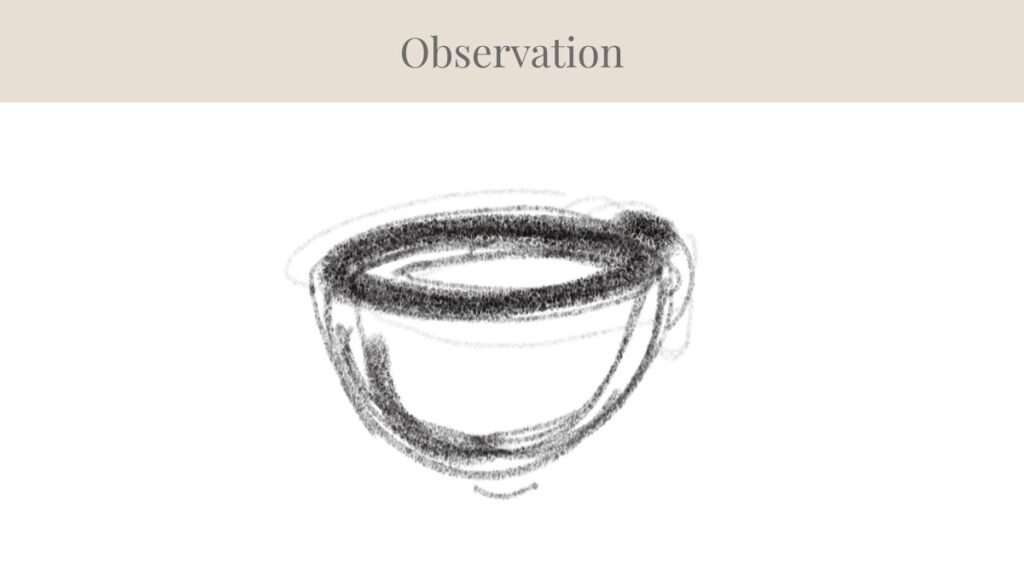
If your drawings feel flat, lifeless, or “off,” you’re not alone.
This is one of the most common beginner frustrations.
The good news?
It’s not about talent — it’s about understanding form and depth.
⸻
The Real Reason Drawings Look Flat
Flat drawings usually come from one issue:
👉 seeing objects as outlines instead of forms
When you draw only edges, you miss:
- volume
- depth
- structure
⸻
Shape vs Form (This Changes Everything)
Let’s simplify:
- Shape = flat (2D)
- Form = three-dimensional (3D)
A circle becomes a sphere when you understand light and volume.
A rectangle becomes a box when you understand depth.
⸻
The Missing Ingredient: Light and Shadow
Light reveals form.
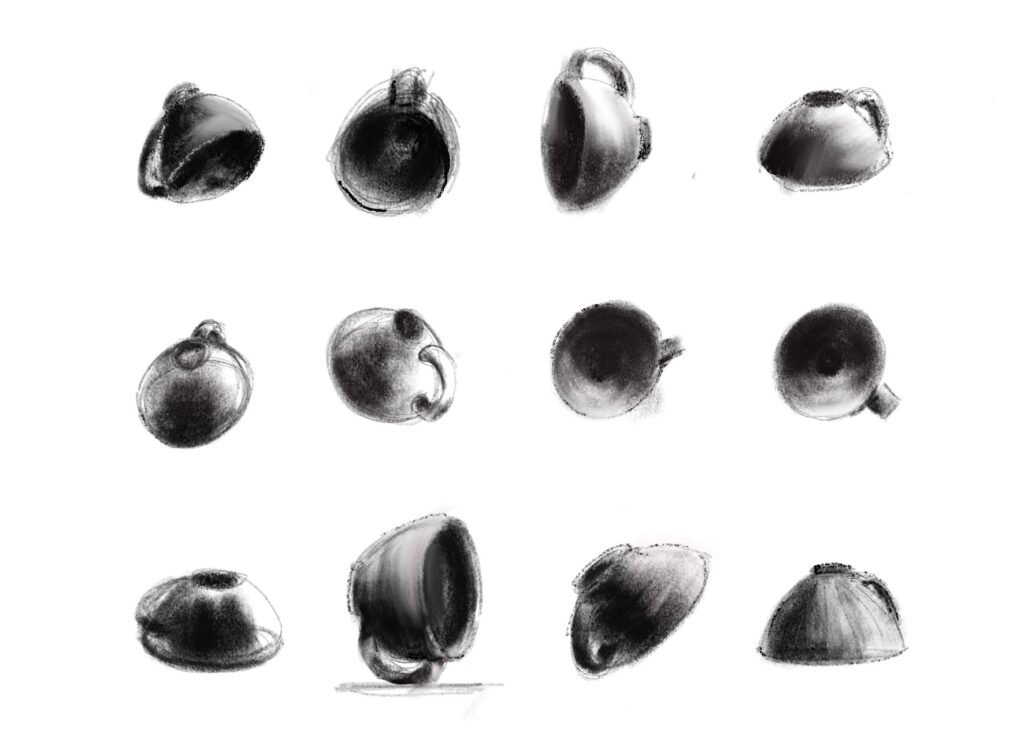
Without it:
- everything looks flat
- there’s no sense of depth
Start observing:
- where light hits
- where shadows fall
- how tones shift across a surface
⸻
A Practical Fix You Can Use Today
Take any object.
Instead of drawing the outline first:
- Identify the main form (cylinder, sphere, box)
- Lightly sketch that structure
- Add basic shading
You’ll immediately notice more depth.
⸻
Before you start perfecting light and shadow, start observing light in rough sketches.
Forget perfection.
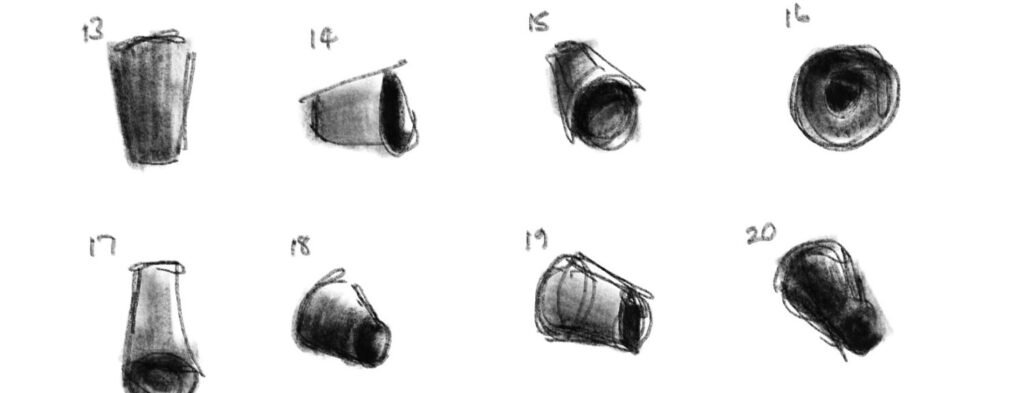
👉 Practice This Step-by-Step
Use the 20 Views Drawing Exercise on to train this properly.
It guides you through:
- multiple angles
- form recognition
- subtle shifts in perspective
This is where flat drawings start becoming dimensional.
⸻
Final Thoughts
Flat drawings aren’t a failure.
They’re a signal.
You’re ready to move from:
drawing shapes 👉 [to] understanding form
And that’s where real progress begins.
⸻
If you’re ready to draw a different object, try this:
👉 Use the practice lab to generate more ideas